
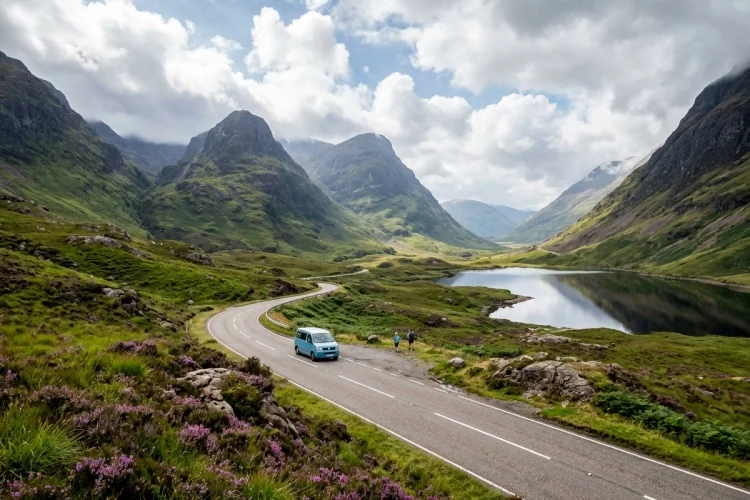

Scotland can change character within a single day. You might begin among Edinburgh’s medieval lanes, cross a landscape of quiet lochs in the afternoon, and finish beside mountains disappearing into cloud.
That variety makes the country exciting, but it can also make a first itinerary difficult. Places that look close on a map may be separated by narrow roads, limited buses, ferry connections, or viewpoints that tempt you to stop every ten minutes.
The country is relatively compact, yet its mountains, islands, and long peninsulas create slow journeys. A good Scotland itinerary should therefore be based on actual travel time rather than mileage alone.
This guide to travelling around Scotland covers trip length, seasons, transport, islands, driving, budgeting, and a practical beginner route. The main rule is simple: plan less than you think you can fit.
Scotland becomes more memorable when you have time for an unexpected walk, a long lunch, or a weather delay that leads somewhere better.
How Many Days Should You Spend in Scotland?
A long weekend works for Edinburgh or Glasgow with one nearby day trip. To combine a city, the Highlands, and an island or coastal destination, seven to ten days is more comfortable.
With one week, spend two nights in Edinburgh, travel through Stirling or Loch Lomond, stay around Glencoe or Fort William, and continue to Inverness, Oban, or Skye. Ten to fourteen days gives you room to add the Cairngorms, Mull, Fife, or the northeast coast.
VisitScotland publishes routes ranging from short breaks to a 14-day national itinerary. This gives you an idea of how much there is to see, even when your holiday lasts two weeks.
Choose one broad area and explore it properly instead of connecting distant places simply because they look impressive online. Two relaxed nights in one place will usually be more enjoyable than constantly checking in and out of hotels.
When Is the Best Time to Visit?
Late spring and early autumn suit many first-time visitors. May, September, and early October generally provide useful daylight and good access to outdoor attractions without the busiest part of summer, although dry weather is never guaranteed.
June through August brings long days and a wide choice of tours and activities. It is also a popular period in Edinburgh, Skye, and major Highland destinations, so planning ahead is sensible.
Winter offers quieter cities, dramatic scenery, festive events, and excellent opportunities for dark-sky experiences. However, daylight is limited, and mountain conditions can become serious.
In every season, carry layers, sturdy shoes, and waterproof outerwear. Scotland’s weather can change quickly, particularly in exposed coastal and mountain areas.
Midges are usually active from May to October, especially in the west Highlands, islands, and damp rural locations. Long sleeves and suitable insect repellent can make calm summer evenings much more comfortable.
Getting Around by Train, Bus, Tour, or Car
ScotRail connects Scotland’s main cities and operates scenic services toward destinations such as Oban, Fort William, Mallaig, Inverness, and Kyle of Lochalsh. Train travel is an excellent option when you want to enjoy the landscape instead of concentrating on the road.
Buses and coaches reach communities beyond the railway network. Traveline can help you plan journeys involving different operators and forms of transport, including trains, buses, ferries, and trams.
Public transport is practical for city-based trips, but rural schedules may be limited. A rental car offers greater freedom for beaches, castles, hiking areas, glens, and small villages.
Guided tours provide a useful compromise when you do not want to drive. Choose a multi-day tour for distant destinations such as Skye rather than a rushed day trip that spends most of the experience inside a vehicle.
What First-Time Drivers Need to Know
Vehicles travel on the left in Scotland. Drivers accustomed to driving on the right should be especially careful at roundabouts, junctions, and the first turn after leaving a petrol station or car park.
Highland roads can be narrow, winding, and slower than their distance suggests. On single-track roads, use the marked passing places, allow faster local traffic to overtake, and never park in a passing place to take photographs.
Plan shorter driving days than you would on a motorway-based holiday. Sheep, cyclists, poor visibility, roadworks, and scenic stops can turn a 100-mile journey into most of the day.
Fuel stations are less frequent in remote areas, so refill before the tank becomes low. Download offline maps as a backup, but follow road signs, closures, and local instructions instead of trusting navigation software blindly.
How to Include a Scottish Island
A Scottish island can become the highlight of your holiday, but every ferry adds another timetable and possible delay. First-time visitors should usually choose one island rather than trying to collect several.
Skye is accessible by bridge from Kyle of Lochalsh or by ferry from Mallaig to Armadale. The ferry journey takes approximately 45 minutes, and CalMac recommends booking ahead and checking the latest service information before travelling.
Mull works naturally with a stay in Oban, while Arran is a convenient option from Scotland’s west coast. Larger island groups, such as the Outer Hebrides, deserve a separate trip or several dedicated days.
Reserve vehicle space early during busy periods. Foot passengers should also check current booking and check-in requirements before departure.
Stay for at least two nights on a larger island. Arriving late and leaving the following morning gives you very little time to explore and turns the experience into a transport exercise.
A Simple First-Time Scotland Itinerary
Begin with two nights in Edinburgh. Explore the Old Town, visit a museum or castle, and spend time beyond the Royal Mile in neighborhoods such as Stockbridge or Leith.
Travel through Stirling or Loch Lomond, then spend two nights in Glencoe, Fort William, or Oban. Your choice depends on whether you prefer hiking, dramatic mountain scenery, or seafood and island connections.
Continue to Skye, Mull, or Inverness for another two nights. Return through the Cairngorms or take a scenic train toward Glasgow, where you can finish with architecture, restaurants, live music, and an easier connection home.
This route can be shortened or extended according to your travel style. Removing one overnight stop often improves the journey because it creates time for changing weather, rest, and spontaneous detours.
Budgeting, Booking, and Packing
The largest expenses will usually be accommodation, car rental, fuel, long-distance transport, and restaurant meals. Hostels, guesthouses, self-catering properties, supermarket lunches, and advance rail tickets can reduce the total.
Book your accommodation, rental car, major train journeys, and vehicle ferries before filling the schedule with smaller attractions. This is particularly important when visiting remote communities with a limited number of rooms.
Do not choose accommodation based only on the cheapest price. A slightly more expensive room near a railway station or ferry terminal may save money on taxis and reduce travel time.
Pack a waterproof jacket, comfortable walking shoes, warm layers, a portable charger, and a small daypack. An umbrella can help in cities, but a good hood is often more practical in windy coastal areas.
Before taking a remote walk, check the forecast, carry water and snacks, and tell someone where you are going. Turn back when conditions feel unsafe; reaching every planned viewpoint is never more important than returning safely.
Travelling around Scotland is much easier when your plans remain realistic. Allow seven to ten days when possible, combine one or two cities with a Highland base, and add only one island or distant region.
Use trains and coaches for major connections, rent a car when flexibility genuinely improves the route, and reserve accommodation and ferries early during busy months. Pack for changing weather and leave room for delays and unexpected views.
Start with a simple itinerary and resist adding every castle, loch, and island you discover online. Plan the essentials, keep part of the trip flexible, and let Scotland surprise you between the scheduled stops.