
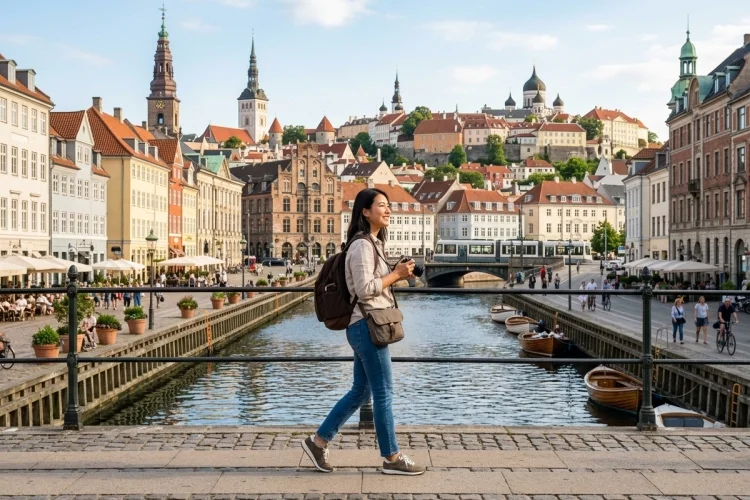

Taking your first solo trip can feel both exciting and slightly terrifying. You get complete freedom over your schedule, meals, and sightseeing, but you also have to navigate transport, choose accommodation, and solve small travel problems without a companion.
The good news is that some destinations make independent travel much easier than others.
The best European cities for first-time solo travellers usually have reliable public transport, compact sightseeing areas, plenty of activities that feel natural to do alone, and enough social opportunities when you want company.
This guide does not rank cities purely by nightlife, prices, or popularity. Instead, it focuses on destinations where a beginner can build confidence without spending the entire holiday decoding complicated transport systems or travelling long distances between attractions.
From Copenhagen’s canals and Vienna’s coffeehouses to Lisbon’s viewpoints and Tallinn’s medieval lanes, these cities let you explore at your own pace.
Pick the one that matches your interests, plan the essentials, and leave enough space for the unexpected moments that make solo travel memorable.
1. Copenhagen: Best for a Smooth and Relaxed First Trip
Copenhagen is a strong choice when you want a well-organised city that feels manageable from the moment you arrive.
Its buses, trains, metro services, and harbour buses are connected through an integrated public transport network, while Copenhagen Central Station acts as a major hub for travelling around the city and beyond.
Many central attractions are close enough to combine on foot. The historic centre contains palaces, shopping streets, canals, museums, food halls, and colourful waterfront areas such as Nyhavn.
Copenhagen’s cultural district alone brings together numerous museums and institutions within a relatively short walking area.
Solo days are easy to fill with a canal tour, museum visit, bakery stop, or walk around the harbour. The main drawback is that accommodation and dining can stretch a modest budget, so booking early and choosing lunch specials can help.
2. Vienna: Best for Culture and Comfortable Solo Dining
Vienna works especially well for travellers who enjoy museums, architecture, classical music, and slow afternoons in cafés.
The city’s official visitor guide highlights everything from imperial landmarks and Art Nouveau buildings to contemporary architecture and major cultural districts.
The public transport system makes it easy to move between the historic centre, Schönbrunn, the MuseumsQuartier, neighbourhood markets, and areas along the Danube.
Short-term and multi-day ticket options are available, so you do not need to buy separate fares for every journey.
Vienna’s coffeehouse culture is particularly useful for a first solo holiday. Sitting alone with coffee, cake, and a book does not feel unusual, making it easy to rest without returning to your hotel.
3. Lisbon: Best for Views, Food, and Lively Atmosphere
Lisbon is a good match for solo travellers who want historic streets, warm evenings, waterfront walks, traditional food, and an energetic social scene.
The city offers metro lines, trams, buses, trains, and riverside connections. The Lisboa Card can include public transport and entry or discounts at a range of museums and attractions, although you should compare the price with your actual itinerary before buying it.
Explore Alfama during the morning, stop at viewpoints around Graça, and spend another day around Baixa, Chiado, Belém, or the waterfront. Lisbon’s famous hills create wonderful views, but they also require comfortable shoes and realistic walking plans.
Joining a food tour or small-group walking tour can be an easy way to meet people early in the trip. Keep your schedule flexible because Lisbon is often most enjoyable when you have time for an unplanned café or sunset stop.
4. Prague: Best for History on a Manageable Budget
Prague offers the dramatic architecture of a major European capital in a centre that is relatively straightforward to explore. Charles Bridge, Old Town Square, the Jewish Quarter, Prague Castle, riverside paths, and historic neighbourhoods can comfortably fill several days.
The city has an extensive network of metro services, trams, buses, and night transport.
Official tourism information recommends public transport as one of the easiest ways to move around Prague, while the Prague Visitor Pass can include unlimited travel and entry to selected attractions.
Prague is popular, so the central streets can feel crowded during peak hours. Visit major landmarks early, then explore quieter areas such as Vinohrady, Holešovice, or parks overlooking the city.
For meeting other travellers, consider a hostel activity, guided history walk, cooking experience, or small evening tour instead of relying entirely on nightlife.
5. Ljubljana: Best for a Gentle Introduction to Solo Travel
Ljubljana is one of the easiest cities on this list to understand. The Slovenian capital is compact, much of its centre is pedestrianised, and many important sights are connected by pleasant riverside paths.
A typical day might include Ljubljana Castle, the Central Market, riverside cafés, bridges designed by Jože Plečnik, and a walk through Tivoli Park. You can see plenty without rushing or repeatedly using public transport.
The city is also large enough to offer restaurants, museums, tours, and evening activity without feeling overwhelming.
Official tourism guidance describes the centre as compact and encourages visitors to explore beyond the main route into green areas and nearby Central Slovenia.
Ljubljana is ideal for travellers who are nervous about navigating a huge capital. It also makes a practical base for organised day trips to lakes, caves, and mountain landscapes.
6. Tallinn: Best for Medieval Atmosphere and Easy Navigation
Tallinn combines a storybook Old Town with creative neighbourhoods, modern cafés, museums, and Baltic Sea views. The historic centre is divided between the Lower Town and Toompea, yet remains compact enough to explore largely on foot.
The airport is close to the centre, and public transport provides straightforward connections into town. The Tallinn Card includes public transport and admission to more than 50 museums and attractions, which can be useful for an active sightseeing itinerary.
After seeing the medieval centre, walk toward Kalamaja, the Telliskivi Creative City area, or the waterfront. These neighbourhoods add contemporary food, design, and cultural spaces to the traditional Old Town experience.
Tallinn suits a two- or three-night solo city break, especially when you prefer a destination that is visually impressive but not physically exhausting to navigate.
7. Amsterdam: Best for Museums and Independent Exploration
Amsterdam is easy to enjoy alone because so many of its main experiences do not require a companion. You can spend hours in museums, join a canal cruise, explore markets, walk beside historic waterways, or visit neighbourhood cafés at your own pace.
The official city guide specifically recommends activities for people travelling solo, including cultural venues, independent cinemas, food experiences, parks, workshops, and group tours.
Trams, metro services, buses, ferries, and trains connect the main areas, although central Amsterdam is also highly walkable. Do not feel pressured to cycle immediately; busy bicycle lanes can be confusing for inexperienced visitors.
Museum tickets and well-located accommodation often need advance booking. Staying outside the most crowded canal-ring streets can provide a calmer experience while keeping you close to public transport.
How to Choose the Right City
Choose Copenhagen or Vienna when smooth transport and organised sightseeing are your priorities. Lisbon and Prague provide lively atmospheres, plenty of group activities, and strong options for travellers who want to socialise.
Ljubljana and Tallinn are better for a calmer first adventure because their central areas are easy to understand. Amsterdam is an excellent fit for museum lovers and travellers who enjoy planning independent days.
Think about your budget, preferred weather, flight connections, and travel pace. A city that matches your personality will feel more comfortable than one chosen only because it is popular on social media.
Practical Tips for Your First Solo Trip
Book your first night and airport transfer plan before departure. Knowing exactly how to reach your accommodation removes one of the most stressful parts of arriving alone.
Stay in a central, well-connected area rather than choosing the cheapest room far outside the city. Share your itinerary with someone you trust, keep digital copies of important documents, and avoid carrying all your cards and cash together.
Plan one group activity near the beginning of the trip. A walking tour, food class, hostel event, or day excursion can provide social contact without forcing you to spend the entire holiday with strangers.
Most importantly, do not overload your schedule. Solo travel requires more small decisions than travelling with someone else, so quiet breaks are part of the experience rather than wasted time.
The best European cities for first-time solo travellers make independence feel exciting rather than intimidating. Copenhagen and Vienna offer reliable infrastructure, while Lisbon and Prague combine major landmarks with lively street life.
Ljubljana and Tallinn provide compact, beginner-friendly centres, and Amsterdam makes it easy to build full days around museums, canals, and neighbourhood exploration.
None is perfect for every traveller, but each provides the transport, activities, and variety needed for a confident first journey.
Choose one destination, reserve a comfortable base, and plan only the most important details. Then step outside, follow your curiosity, and enjoy the rare freedom of creating a trip entirely around your own interests.