

A great cup of coffee can turn an ordinary morning into something worth slowing down for. Unfortunately, homemade coffee does not always deliver the rich aroma, balanced flavor, and smooth texture you expect from your favorite café.
The good news is that professional-tasting coffee is not limited to trained baristas or expensive commercial machines.
Learning how to make café-quality coffee at home is mostly about controlling a few important variables: bean freshness, grind size, water quality, brewing ratio, temperature, and technique.
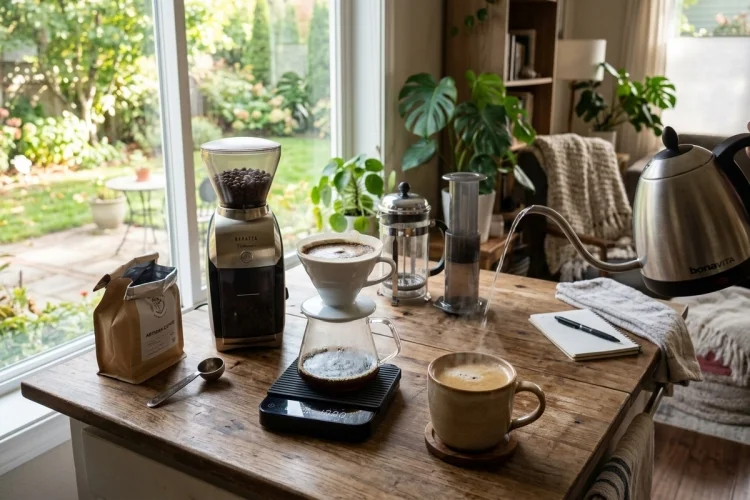
You also do not need to replace everything in your kitchen. A reliable grinder, a digital scale, fresh coffee, and a simple brewer such as a French press, pour-over dripper, AeroPress, or automatic machine can produce excellent results.
The key is consistency. When you measure your ingredients and change one variable at a time, you can understand why your coffee tastes sour, bitter, weak, or overly strong.
With a little practice, your daily brew can become more enjoyable, predictable, and surprisingly close to what a skilled barista would serve.
1. Start with Fresh, High-Quality Coffee Beans
Your brewing technique matters, but it cannot completely rescue stale or poorly stored coffee. For a more flavorful cup, begin with whole beans from a reliable roaster and look for a clear roast date when possible.
Coffee flavor changes over time as roasted beans are exposed to oxygen, moisture, heat, and light.
The National Coffee Association recommends buying smaller quantities, keeping beans in an airtight and opaque container, and storing them in a cool, dark location. Grinding only what you need immediately before brewing also helps preserve aroma and flavor.
Roast level is largely a matter of preference. Light roasts may offer brighter, fruitier, or more floral characteristics, while medium roasts often balance acidity and sweetness. Dark roasts generally taste heavier, smokier, and more intense.
Try several origins and roast profiles instead of assuming that expensive coffee will automatically suit your taste. The best beans are the ones you genuinely look forward to drinking.
2. Invest in a Consistent Burr Grinder
A grinder is one of the most useful upgrades for anyone who wants better coffee at home. Pre-ground coffee may be convenient, but it loses aroma more quickly and gives you little control over extraction.
A burr grinder crushes coffee between two surfaces, producing particles that are generally more consistent than those created by a basic blade grinder. Consistency matters because very small particles can extract too quickly while larger pieces extract more slowly.
Different brewing methods also require different grind sizes. Espresso normally needs a fine grind, pour-over coffee uses a medium or medium-fine setting, and French press works better with a coarse grind.
Counter Culture Coffee notes that grind size can be adjusted to improve flavor for different beans and brewing methods. As a practical rule, grind finer when coffee tastes thin or sharply sour, and grind coarser when it tastes harsh, dry, or unpleasantly bitter.
3. Measure Your Coffee and Water
Cafés do not usually prepare coffee by randomly scooping grounds into a machine. Baristas follow recipes so each cup can be repeated consistently.
A digital scale makes this much easier at home. Instead of measuring beans with spoons, weigh both the coffee and the brewing water in grams.
A useful starting point for filter coffee is approximately 60 grams of coffee per liter of water, which is close to a 1:16.7 coffee-to-water ratio. The Specialty Coffee Association discusses this ratio as a common reference for drip and immersion brewing.
For one mug, you could begin with 18 grams of coffee and 300 grams of water. If the drink tastes too strong, use slightly more water. If it tastes weak, add more coffee or adjust your grind.
The goal is not to follow one ratio forever. It is to establish a repeatable starting recipe that you can change gradually according to your taste.
4. Pay Attention to Water Quality
Brewed coffee is mostly water, so unpleasant tap water can easily affect the final cup. Water with strong chlorine, metallic flavors, or unusual odors may hide the more delicate qualities of your beans.
Filtered water is often a practical choice. However, completely distilled water is not always ideal because some mineral content helps extract flavorful compounds from coffee.
You do not need to become a water chemist to improve your brew. Start by tasting the water on its own. When it tastes clean and pleasant at room temperature, it is more likely to produce enjoyable coffee.
Also use fresh water every time rather than repeatedly reheating water left in the kettle. This small habit can make your brewing routine more consistent.
5. Use the Right Brewing Temperature
Water temperature influences how quickly flavor is extracted from ground coffee. Water that is too cool may produce a thin, sour, or underdeveloped cup. Excessively hot water can contribute to harshness, especially when combined with a grind that is too fine or a long brewing time.
SCA certification requirements for home brewers specify water contacting the coffee grounds within a range of approximately 92–96°C, or around 198–205°F.
Without a temperature-controlled kettle, bring the water to a boil and let it rest briefly before pouring. You do not need to wait several minutes; the aim is simply to avoid aggressively boiling water hitting the grounds immediately.
Temperature can also be adjusted by roast level. A slightly cooler brew may work well for dark coffee, while lighter roasts often benefit from hotter water and greater extraction.
6. Match the Technique to Your Brewing Method
Each coffee maker has its own ideal workflow. The equipment does not need to be expensive, but you should understand how it controls contact time, agitation, and filtration.
Pour-Over Coffee
Rinse the paper filter first to remove loose paper flavors and preheat the brewer. Add the grounds, pour enough water to wet them evenly, and wait around 30–45 seconds for the bloom before continuing.
Pour slowly and evenly rather than flooding one section of the coffee bed. The National Coffee Association recommends grinding immediately before brewing for maximum freshness when making pour-over coffee.
French Press
Use a coarse grind and fully saturate the coffee. Allow it to steep before pressing slowly and pouring the entire drink into cups or another container.
Leaving brewed coffee sitting on the grounds can make later servings taste heavier and more bitter.
Automatic Coffee Maker
Distribute the grounds evenly in the filter basket and use the correct amount of water. When shopping for a machine, SCA-certified home brewers are tested for factors including brewing temperature, consistency, performance, and extraction quality.
7. Learn to Diagnose Your Coffee by Taste
A café-quality cup should not simply be strong. It should taste balanced, with sweetness, acidity, aroma, and bitterness working together.
When coffee tastes sharply sour, it may be under-extracted. Try a finer grind, hotter water, a longer brewing time, or slightly more water passing through the coffee.
When it tastes very bitter, hollow, or drying, it may be over-extracted. Use a coarser grind, shorten the brewing time, or reduce agitation.
Weak coffee is not always caused by using too little coffee. An incorrect grind may allow water to move through too quickly. Similarly, an overly strong cup can sometimes be improved by changing the ratio rather than adding milk or sugar.
Change only one variable at a time. Otherwise, you will not know which adjustment improved or damaged the result.
8. Create Smooth, Café-Style Milk Foam
You do not need advanced latte art skills to make a satisfying cappuccino or latte. The main goal is to produce smooth microfoam rather than large, dry bubbles.
Begin with cold milk and a clean pitcher. If you have a steam wand, position the tip close to the surface to introduce a small amount of air. Then lower it slightly to create a spinning motion that blends the foam into the milk.
The SCA-referenced range commonly used for steamed milk is approximately 55-65°C, or 139–149°F. Heating milk far beyond this range can reduce sweetness and damage its smooth texture.
Without an espresso machine, warm the milk gently and use a handheld frother, French press, or sealed heat-safe jar. The texture may differ from professional steam-wand microfoam, but it can still make homemade coffee feel much more polished.
9. Keep Your Equipment Clean
Old coffee grounds and oils can create bitter, stale flavors even when you are using excellent beans. Rinse removable parts after brewing and wash your carafe, filter holder, French press, or pour-over dripper regularly.
The National Coffee Association advises cleaning pour-over equipment after each use because collected grounds and coffee-oil buildup can affect the taste of the next cup.
Grinders also require attention. Brush away trapped grounds and follow the manufacturer’s instructions for deeper cleaning. Avoid putting water inside a grinder unless the manual specifically allows it.
Automatic machines may need descaling to remove mineral buildup. A clean setup not only improves flavor but can also help your brewing equipment work more reliably.
Making café-quality coffee at home is less about owning expensive equipment and more about developing a repeatable process.
Fresh whole beans, a consistent grinder, clean water, an accurate ratio, and an appropriate brewing temperature provide the foundation for a much better cup.
From there, focus on your chosen brewing method and learn to adjust the grind according to taste. Smooth milk foam and clean equipment can make the experience feel even closer to visiting a professional coffee shop.
Start with one simple recipe, such as 18 grams of coffee and 300 grams of water. Record the grind setting, brewing time, and result, then make one small adjustment during your next attempt.
Brew carefully, taste thoughtfully, and turn your everyday coffee routine into a skill worth enjoying.