
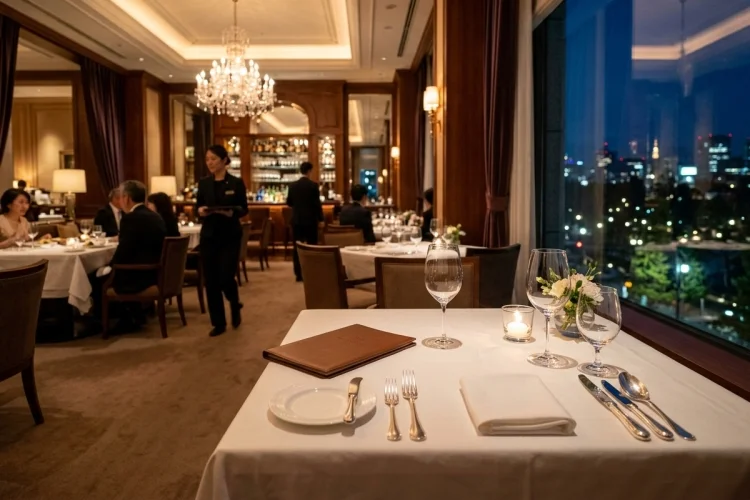

Walking into a fine-dining restaurant for the first time can feel a little like entering a world with secret rules. The tables look perfectly arranged, the menu includes unfamiliar words, and there may be more glasses and forks in front of you than you normally use in an entire week.
The good news is that fine dining is not a test. You are not expected to arrive with expert knowledge of French cooking, rare wines, or formal table etiquette. The restaurant staff are there to guide you, answer questions, and help you enjoy the experience.
This fine dining for first-timers guide explains what usually happens from the moment you make a reservation until the final bill arrives. You will learn how tasting menus work, what to wear, how to order wine without feeling awkward, and what all those small courses actually mean.
Once you understand the basic flow, the experience becomes much less intimidating – and far more enjoyable.
Before You Book: Check the Details
Fine-dining restaurants often require reservations, especially for weekends, special occasions, and chef-led tasting menus. Some venues also request a deposit or full prepayment because they prepare ingredients specifically for the number of expected guests.
Before confirming your table, check the menu price, cancellation policy, dress code, and estimated dining time. A multi-course experience can take several hours, so it may not be the best choice when you have theatre tickets or another appointment immediately afterward.
Dress codes vary considerably. Some restaurants welcome smart-casual clothing, while others request jackets, elegant dresses, or formal shoes. Checking the restaurant’s official website is safer than assuming every expensive dining room requires black tie.
This is also the right time to mention allergies, vegetarian requirements, religious dietary restrictions, pregnancy-related limitations, or ingredients you genuinely cannot eat. A tasting-menu kitchen may need advance notice to prepare suitable alternatives.
Arriving and Being Seated
Try to arrive at the restaurant on time rather than extremely early or fashionably late. Fine-dining kitchens often coordinate multiple tables carefully, particularly when guests are following the same tasting menu.
At the entrance, a host will normally confirm your reservation, take coats, and guide you to the table. You may be offered water, Champagne, or an aperitif while you look at the menu.
Do not panic when you see several forks, knives, spoons, and glasses. In many modern restaurants, new cutlery is brought with each course. When everything is already arranged, the simplest rule is to begin with the utensils furthest from the plate and move inward.
Good table manners are mostly about making the meal comfortable for everyone. Eating with your mouth closed, avoiding loud phone calls, and speaking politely matter far more than memorising complicated historical rules.
Understanding the Menu
Most high-end restaurants offer either an à la carte menu, a tasting menu, or both. With à la carte dining, you select individual starters, main courses, side dishes, and desserts.
A tasting menu is a sequence of smaller dishes chosen by the chef. It is designed to show the restaurant’s cooking style, seasonal ingredients, and signature techniques through several connected courses.
The Michelin Guide’s inspectors suggest comparing the tasting menu with the à la carte selection. A tasting experience can be especially worthwhile when it contains dishes that clearly represent the chef’s personality and are unavailable elsewhere on the menu.
Do not be afraid to ask about unfamiliar terms. A short question such as, “Could you explain this dish?” is completely normal. Staff would rather help you choose confidently than watch you order something based on a wrong guess.
The first food may be an amuse-bouche, a complimentary bite selected by the kitchen. You might also receive bread, small snacks, a palate cleanser between courses, and petit fours with coffee. These extras are part of the journey rather than separate dishes you forgot to order.
What Fine-Dining Service Feels Like
Service in an upscale restaurant is usually attentive but carefully controlled. Servers may explain each plate, replace cutlery, refill water, clear crumbs, and time the courses so the table never feels rushed.
When a dish arrives, listen to the short explanation. It may tell you about an unusual ingredient, cooking method, sauce, or recommended way to eat the components together.
You do not need to pretend you understand everything. Asking, “What was the sauce again?” or “Should these elements be eaten together?” shows genuine interest rather than inexperience.
If you dislike a dish, you are not required to praise it. However, there is a difference between personal preference and poor preparation. Saying that you normally dislike oysters is different from claiming that the restaurant cooked them badly.
When there is an actual problem – such as food arriving cold or an allergy being overlooked – mention it calmly and promptly. Giving the team an opportunity to fix the issue is usually more productive than staying silent and complaining afterward.
Ordering Wine Without Feeling Intimidated
The wine list may be the most frightening part of a first fine-dining experience. It can contain hundreds of bottles organised by colour, country, region, grape, producer, or vintage.
Traditional high-end wine lists are commonly arranged by colour and geographical origin, which can be confusing when you know the flavour you enjoy but not the region that produces it.
This is where the sommelier becomes helpful. A sommelier is not there to push you toward the most expensive bottle. Their role is to recommend drinks that match the food, your preferences, and your budget.
Be direct but discreet. You can point to a bottle in a comfortable price range and say, “We would like something around this price.” Then describe what you enjoy: light or full-bodied, dry or slightly sweet, familiar or adventurous.
Many tasting menus offer optional wine pairings, with a small pour selected for each course. Pairings can be educational, but they increase the bill and may involve more alcohol than expected. Non-alcoholic pairings, tea pairings, and drinks by the glass are increasingly common alternatives.
Enjoying the Pace of a Tasting Menu
Fine dining is intentionally slower than an ordinary restaurant meal. Portions may look small, but several courses, snacks, bread, desserts, and drinks can add up to a surprisingly substantial experience.
Avoid eating too much bread at the beginning just because you are hungry. Leaving room allows you to appreciate the later dishes without feeling uncomfortable halfway through dinner.
Courses generally progress from lighter flavours to richer ones, although creative menus do not always follow traditional patterns. You might begin with delicate vegetables or seafood, move toward meat or a substantial main course, and finish with a pre-dessert and final sweet dish.
There is no need to analyse every bite like a professional critic. Notice the flavours, textures, presentation, and ingredients, but remember that the main purpose is pleasure.
Taking a quick photograph is usually acceptable unless the restaurant has a specific policy. Keep the flash off, avoid rearranging the table for a long photo session, and do not let content creation interrupt everyone else’s meal.
The Bill, Service Charges, and Leaving
When you are ready to finish, ask for the bill politely rather than waiting for the restaurant to guess. The check may include the tasting menu, drinks, supplements, water, taxes, and a service charge.
Review it calmly, particularly when the restaurant required advance payment. The deposit may already have been deducted, or the prepaid food may appear separately from drinks and additional courses.
Tipping customs depend on the country. In some places, a service charge is automatically included; elsewhere, guests are expected to add a percentage. Check the bill before tipping twice, and ask the server when the wording is unclear.
You may be offered coffee, tea, chocolates, or small pastries at the end. There is no obligation to order anything more, especially after a long tasting experience.
Collect your belongings, thank the team, and leave when you are comfortable. Fine dining may be polished, but the best restaurants want you to depart feeling cared for – not relieved that you survived a complicated ceremony.
Fine dining for first-timers becomes much easier once you know the general rhythm. Check the reservation rules, communicate dietary needs early, dress according to the restaurant’s guidance, and give yourself enough time to enjoy the meal.
During dinner, ask questions whenever something is unclear. Let the sommelier work within your budget, listen to the servers’ explanations, and focus on enjoying the food rather than performing perfect etiquette.
A great fine-dining experience is not about knowing every ingredient or using every fork flawlessly. It is about curiosity, hospitality, and discovering what a talented kitchen can create.
Choose a restaurant that genuinely interests you, make the reservation, and enjoy your first special meal with confidence.