
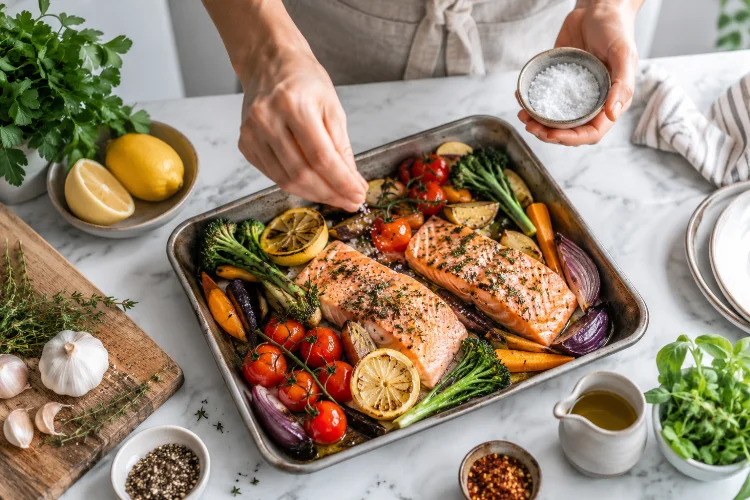

Seasoning can completely change a meal. A plain bowl of vegetables can become deeply satisfying with the right balance of salt, acidity, herbs, and spices, while an expensive piece of meat can taste disappointing if it is bland or aggressively salty.
The tricky part is knowing when enough is enough.
Many home cooks assume seasoning simply means adding salt. Salt is certainly important because it helps other flavours become more noticeable, but good seasoning is really about balance.
Acidity, sweetness, bitterness, aroma, heat, and umami can all make food taste more complete without forcing you to keep reaching for the salt shaker.
Learning how to season food properly without making it too salty is therefore less about memorising exact measurements and more about developing a reliable cooking habit.
Salt in small stages, understand which ingredients already contain sodium, taste as you cook, and use other flavour-building techniques when something seems flat.
Once you start thinking this way, seasoning becomes much easier.
1. Add Salt Gradually Instead of All at Once
One of the easiest ways to oversalt food is to add a large amount at the beginning and hope for the best.
A safer approach is to season gradualy.
Add a modest amount early, let the food cook, taste it, and then adjust. This gives you much more control because ingredients change during cooking. Water evaporates, sauces reduce, vegetables release moisture, and flavours become more concentrated.
A soup that tastes lightly seasoned after five minutes may taste noticeably saltier after simmering for another hour.
Serious Eats recommends seasoning in stages and tasting throughout the cooking process rather than treating salt as one final measurement.
Different salt crystals also vary in density, which means one teaspoon of one type may not deliver exactly the same saltiness as another.
The simplest rule is this: you can always add more salt, but removing it is far harder.
2. Taste Your Food Before Reaching for More Salt
“Season to taste” is one of the most common instructions in recipes, but many people treat it as an afterthought.
It should actually be one of your main cooking techniques.
Taste food at several stages when it is safe to do so. Ask yourself what is missing rather than immediately deciding that it needs salt.
Does the dish taste dull? It may need acidity. Does it feel heavy? A little lemon juice could brighten it. Is the flavour one-dimensional? Black pepper, herbs, chilli, or toasted spices might help more than another pinch of salt.
This distinction matters because salty food and well-seasoned food are not the same thing.
For example, tomato sauce may initially taste flat. Adding salt can help, but a splash of vinegar or squeeze of lemon may create the freshness you were actually looking for.
Taste first. Adjust second.
That small habit can prevent a surprising number of kitchen disasters.
3. Remember That Many Ingredients Already Contain Salt
The salt shaker is not the only source of sodium in your kitchen.
Soy sauce, stock cubes, Parmesan, bacon, cured meats, anchovies, olives, pickles, miso, prepared sauces, and many canned products can already contribute significant saltiness.
If a recipe contains several of these ingredients, season much more carefully.
For example, imagine making a pasta sauce with pancetta, Parmesan, and salted pasta water. Each component contributes sodium. If you salt the sauce heavily before adding the cheese and pasta water, the finished dish can quickly become overwhelming.
The NHS notes that a large share of the salt people consume is already present in everyday foods, including bread, cereals, meat products, ready meals, takeaway dishes, and sauces. UK guidance recommends that adults consume no more than 6g of salt per day in total.
Reading labels can help too. Sometimes the smartest seasoning decision is simply choosing a lower-salt stock or sauce before cooking even begins.
4. Use Acid to Make Food Taste Brighter
Acid is one of the most useful tools for reducing your dependence on salt.
Lemon juice, lime juice, vinegar, tomatoes, yoghurt, and other acidic ingredients can make flavours feel sharper and more lively.
This is especially helpful with rich foods.
A buttery sauce, slow-cooked stew, creamy soup, or fatty piece of meat may taste heavy even when it already contains enough salt. Adding acidity can cut through that richness and restore balance.
Try adding a few drops of lemon juice to roasted vegetables or finishing a lentil soup with a small splash of vinegar. You may notice that the dish suddenly tastes more flavourfull without needing additional sodium.
The American Heart Association similarly recommends using citrus juice, vinegars, garlic, onions, herbs, and spices as alternatives to relying heavily on salt.
Acid should not make food obviously sour unless that is the goal. Usually, you only need enough to make everything taste clearer.
5. Build Flavour With Herbs, Spices, Aromatics, and Umami
Salt should support flavour, not create all of it.
Garlic, onions, ginger, chilli, cumin, coriander, rosemary, basil, thyme, paprika, black pepper, citrus zest, and toasted spices can create complexity without dramatically increasing sodium.
How you cook them also matters.
Toasting whole spices can bring out deeper aromas, while blooming ground spices briefly in oil helps distribute their flavour throughout a dish.
Serious Eats notes that whole and ground spices behave differently, with whole spices releasing flavours more slowly and ground spices integrating quickly.
Umami can also make food feel more satisfying.
Mushrooms, tomatoes, roasted vegetables, nutritional yeast, and certain fermented ingredients can add savouriness. Just remeber that some umami ingredients, such as soy sauce, miso, and Parmesan, are also salty.
This is where balance becomes important.
Instead of adding three salty ingredients together, combine one salty umami ingredient with unsalted aromatics, herbs, or vegetables.
6. Be Extra Careful When Reducing Sauces and Soups
Reduction concentrates flavour – and salt.
If you begin with salty stock and reduce it by half, the liquid becomes much more intensely seasoned even though you have not added extra salt.
This is why sauces, gravies, soups, and braises often become oversalted near the end of cooking.
Season lightly at the beginning when you know a dish will simmer for a long time. Make your final adjustment once it is close to its finished volume.
The same principle applies to pasta sauces and curries.
A sauce that seems underseasoned when watery may become perfectly balanced once excess moisture cooks away.
Using unsalted or reduced-sodium stock also gives you more control. The CDC notes that packaged and restaurant foods are major contributors to sodium intake, making lower-sodium ingredients useful when you want to control seasoning yourself.
Think of reduction as turning up the volume on everything already inside the pan.
7. Know How to Fix Food That Is Too Salty
Even experienced cooks occasionally oversalt something.
The solution depends on the dish.
For soups, curries, and stews, adding more unsalted liquid can dilute the concentration. You can then rebuild the other flavours with herbs, vegetables, or aromatics.
For sauces, adding additional unsalted ingredients can work better than pouring in water. Extra tomatoes, cream, coconut milk, beans, or vegetables may restore balance while keeping the texture pleasant.
Acidity sometimes helps too, although it does not actually remove sodium. It simply changes how the overall flavour is perceived.
Sweetness can occasionally balance highly salty sauces, but use it carefully. Too much sugar simply replaces one imbalance with another.
You may also be able to serve an over-seasoned component with something deliberately bland. Salty curry, for example, may become more enjoyable alongside plain rice, while salty roasted vegetables can be mixed with unsalted grains.
The important point is not to panic and dump random ingredients into the pan. Think about concentration, balance, and what the dish can realistically absorb.
How Much Salt Is Too Much?
Cooking technique and dietary guidance are not exactly the same issue, but they overlap.
The NHS recommends no more than 6g of salt per day for adults in the UK, while the World Health Organization recommends less than 5g of salt, equivalent to less than 2,000mg of sodium daily, for adults.
That total includes salt already present in packaged ingredients – not just what you add while cooking.
This is another reason to treat high-sodium condiments seperately from ordinary herbs and spices.
You do not need to make every meal completely salt-free. Instead, aim for deliberate seasoning and greater awareness of where sodium is coming from.
Learning how to season food properly without making it too salty mostly comes down to patience and balance.
Add salt in small stages, taste regularly, and remember that ingredients such as cheese, stock, cured meats, soy sauce, and condiments may already contribute plenty of sodium.
When a dish still seems flat, explore acidity, aromatics, herbs, spices, heat, and umami before automatically adding another pinch.
Also pay attention to cooking methods. Reduction can dramatically concentrate saltiness, while dilution or additional unsalted ingredients can sometimes rescue an over-seasoned meal.
The more you practice tasting with intention, the easier seasoning becomes.
Next time you cook, try making one change: taste your food before every extra addition of salt. That single habit can noticeably improve your cooking.